
By: Violet Moshe, 11 years old.
I’ve been enjoying outings with Toronto Junior Field Naturalists for over three years and as far as I can remember this April was the first time we’ve ever had to cancel due to weather. Bummer! Earth Day stewardship of Prairie Drive Park was on the agenda. Our incredible leaders Anne and Jim Purvis have been Lead Stewards with Toronto Nature Stewards since its inception five years ago and the plan was to plant trilliums. The Trillium rhizomes still needed to be planted, so we met two days later, on a glorious sunny day with Anne and just a few other junior enthusiasts.
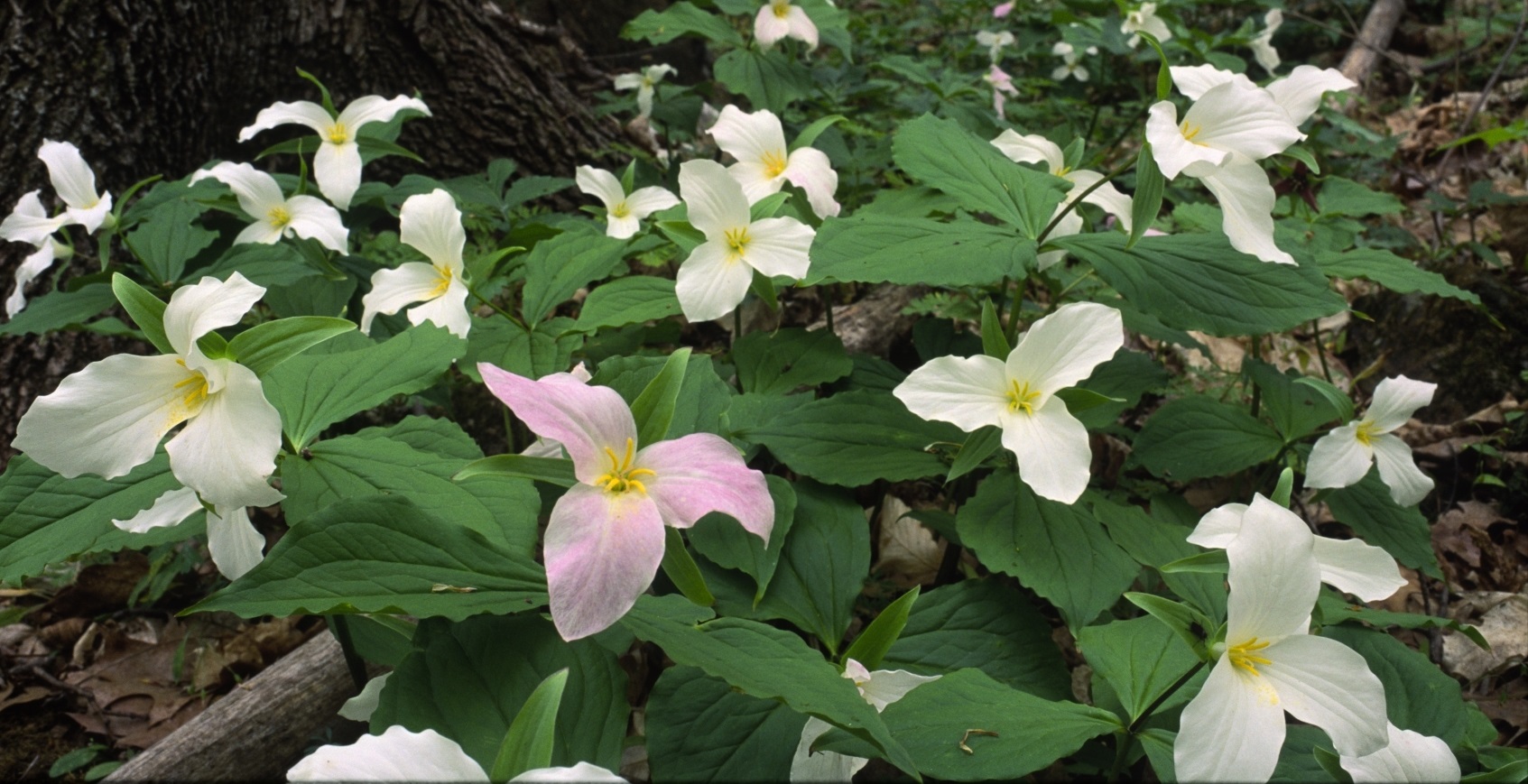
Everybody knows the trillium flower because it’s the official flower of Ontario. Just like its name suggests, the trillium has a three-parted structure: three furry and heart-shaped leaves, three small green sepals, three petals, and a three-sectioned seedpod.

The dispersion of seeds is really interesting and totally relies on… drumroll please… ants! Ants collect the seeds for the elaiosome – a fleshy attachment to the seed that is full of protein. The ants take the entire seed to their home for its nutrition. The seed itself doesn’t get harmed by the ants and that’s how trilliums get reseeded in the forest. This method of dispersing seeds is called myrmecochory.
Although many people think it is illegal to pick trilliums in Ontario, picking or digging up trilliums is prohibited and subject to fines only in provincial parks. People might want to pick trilliums because they are so beautiful or because trillium leaves have antifungal and antibacterial properties good for dressing a wound, but picking trilliums kills them, which is why it is strongly discouraged, and should be made illegal anywhere! If picked, not only would trilliums have little time to grow and not be able to produce seeds but also they would not be able to accumulate enough nutrients for their rhizomes to survive the rest of the year. It takes seven to ten years for a trillium seed to develop into a blooming flower. It takes two to three years for the seed to just develop the root system. So a seed dispersed by a hard working ant today would mature in about seven years, the same year that I’m going to become an adult! By the time those trilliums bloom, I know I’d still be just as excited about muddy boots, sunny spring days filled with ephemerals, and tiny ants doing big jobs.