

An enjoyable activity in winter is identifying animal tracks. Although difficult in busy areas with heavily trampled snow, if you can visit a less-used spot or get out early after a fresh snow, then you will be awarded with a host of tracks to decipher.
On February 15th, Lynn Miller and Lynn Short led an animal tracks outing in the southern end of the Charles
Sauriol Conservation Area. This is what we found. Photos used are from the participants of this outing.
The first thing we look for when identifying tracks is the shape of the print. Is it a hoof or a paw? Are the toes long or short? Are there nail marks? What shape is the pad of the foot? Are the back feet the same as the front? There are many online track charts or books to help you with this if you are just starting out. Bring one along with you.
The second identification clue is the relative position of the prints. Squirrels and rabbits hop so their prints are grouped differently than animals that walk in a straight line. A rabbit’s front paw prints will typically be behind its rear paw prints whereas a squirrel’s front paws are often in line with its rear paws. Knowing this helps determine what you are looking at.

Deep snow can obscure print details, but it can provide other clues. White-tailed deer tracks have two toes with a pointed top and rounded bottom. In deep snow it is hard to see this, but easy to spot the “drag lines” that the deer make as they move their legs through the snow. In less deep snow, the bucks tend to drag their feet more than the does.

Deep snow can also give clues about an animal’s weight that can help identify them. The fox tracks we saw were on top of the snow whereas the coyote tracks went much deeper. Fox tracks are also smaller.
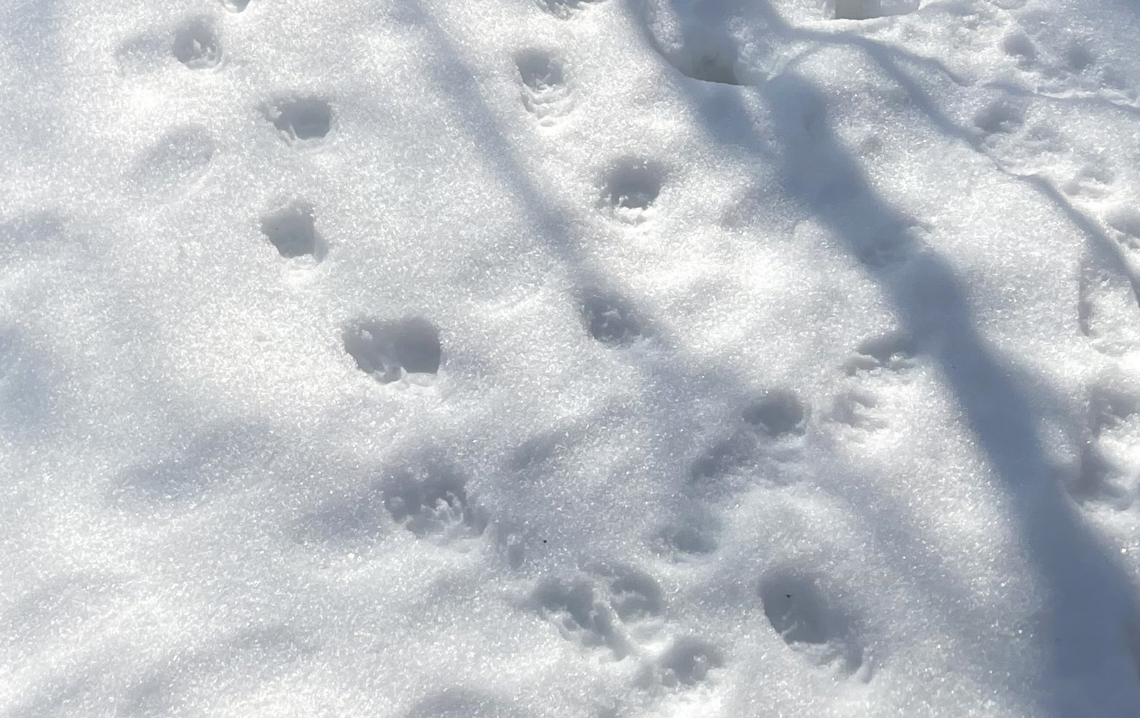
Raccoons have a gait that helps identify them. They walk with the legs on one side of their body moving first, then the legs on the other side. This waddle means their prints don’t overlap as much so you are more likely to see a clear raccoon paw print.

In deeper snow raccoons tend to use the same path going out at night as coming back, so you will often find prints in both directions together in the same track.
But identifying which animal created the track is only half the fun! You can also get a glimpse into animal behaviour by reading their movements in the snow.
The photo below shows a squirrel that left the safety of a tree and slowly hopped through the snow, but then bounced quickly back.

The photo below is a coyote print atop raccoon prints. You can see that the coyote is heading in the opposite direction from the raccoon. We can surmise that the coyote was using the raccoon’s track instead of having to waste energy slogging through the deep snow itself. This gives us an insight into the behaviour of animals in winter when conserving energy is essential to survival.

While this outing focussed primarily on finding fresh prints in the snow, tracking also involves identifying scat (which we didn’t find), seeing signs of feeding (we saw areas where the deer had eaten the greenery from the lower branches of the cedar trees), and watching for indications of other behaviours (we saw places where bucks had rubbed their antlers on young trees, scraping the bark off the trees). These signs help us to identify which animals have been using the area, and how.
We hope our outing and this article entices more people to learn more about the joy of discovering, identifying and interpreting the stories that animals leave for us in the snow!
It’s important to remember not to approach or disturb wildlife in their habitats. Winter can make it difficult enough for animals to survive. We don’t want to scare or disturb them, or potentially destroy the habitat or food sources that they depend on when we are walking off trail.
Lynn Miller and Lynn Short