
It might seem strange to be talking about gardening in the fall, but for native gardens, this is actually one of the best times of the year to get planting!
I’ve been on a multi-year journey creating a native garden, with the goal of providing a little more habitat and food for our native pollinators. Along the way, I’ve discovered some fascinating things about native plants, and a few tricks that make gardening easier (which is always a bonus!).
Let Nature Do the Stratification!
One of my most fascinating discoveries was that many native plant seeds require a process called stratification before they will germinate. Nature is pretty amazing! Many native seeds have built-in mechanisms that respond to cold temperatures and moisture. This gives them a sort of natural calendar, ensuring they don’t wake up and start growing until winter has passed and conditions are right.
There are two ways to stratify seeds. You can place them in your refrigerator in a moist container with a sterile growing medium, such as vermiculite or perlite, for approximately 4–8 weeks (depending on the species). Or, you can let nature do the work by planting the seeds outdoors in late fall, just before or even after the first snowfall.
Given that my wife isn’t particularly enthusiastic about having seeds and dirt taking up space in the refrigerator for two months, I tend to favour the natural approach!

There is one downside: mice and other hungry wildlife may help themselves to some of your seeds. But that’s all part of gardening with nature!
You can find native seeds at the Evergreen Brick Works Garden Market, or order online from Northern Wildflowers and Swallowtail Native Plants. You can also visit garden centres in the spring and purchase native plants that are ready to go into the ground. While buying established plants is convenient, they can be relatively expensive. Starting from seed is a much more economical way to fill your garden, especially if you’re patient!
Leave the Leaves (and Twigs Too!)
Another great way to help native insects and pollinators is to rethink our traditional fall cleanup. Rather than making the garden spotless, consider leaving the leaves, stems and twigs!
A layer of fallen leaves provides important insulation and shelter for insects and other wildlife overwintering in the soil and leaf litter. Many native bees also use hollow stems, flower heads and pieces of wood for nesting and overwintering.
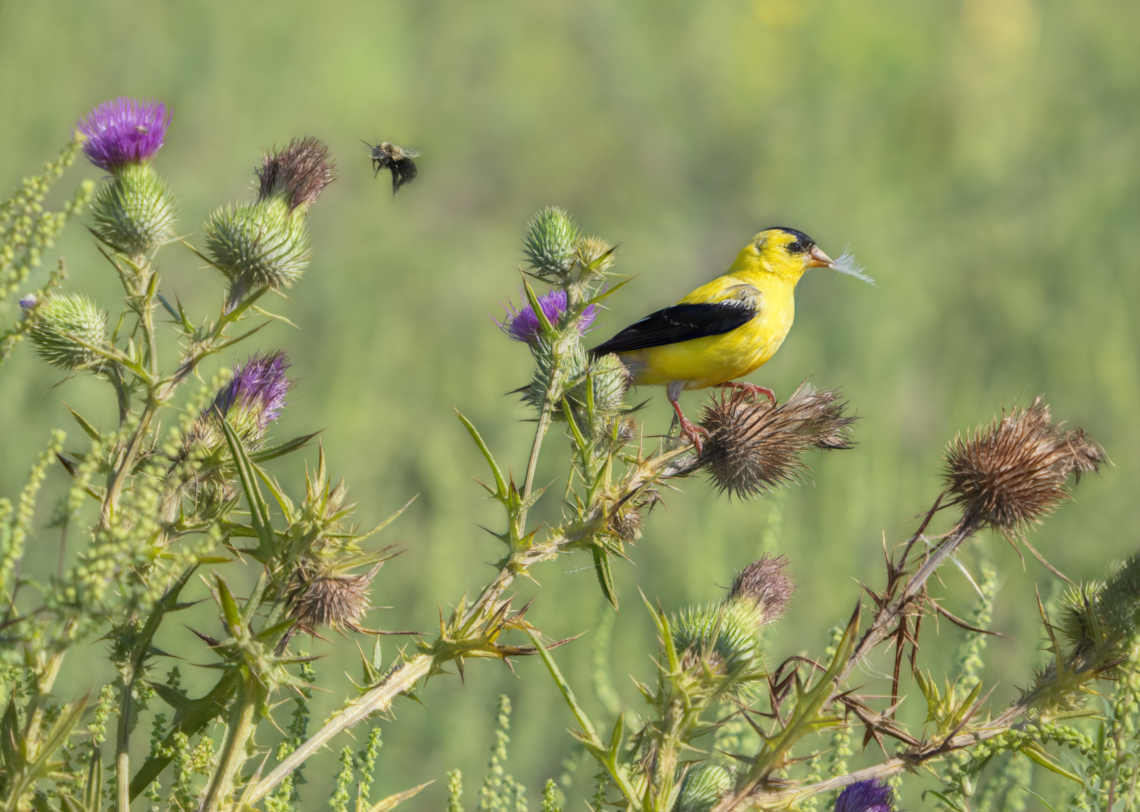
My approach is to rake most of the leaves directly into my garden beds. This provides wildlife habitat, helps improve soil quality as the leaves break down, and suppresses unwanted weeds. I also leave most of the perennial stems standing. Their seed heads provide a welcome winter food source for goldfinches and other birds.
And let’s be honest, if you’re a lazy gardener like me, there’s another great benefit: it’s a lot easier to rake leaves into the garden than to stuff them into bags and drag them to the curb for pickup!
Ideally, leave the leaves and stems in place throughout the winter and beyond. If you do need to tidy things up, try to wait until well into spring, when overwintering insects have had a chance to emerge. A little patience can make a big difference to the wildlife you’re trying to support.
A Little Less Cleanup, A Lot More Nature!
Fall is a wonderful opportunity to give your garden a head start for next year. Plant a few native seeds, leave some leaves and stems, and let nature take care of some of the work.
You might be surprised at what starts growing in the spring. And while your neighbours might wonder why you’re not cleaning up your garden, you’ll know you’re doing something wonderful for native plants, pollinators, birds and other wildlife.
Who knew being a lazy gardener could be so good for nature!
-Pete S